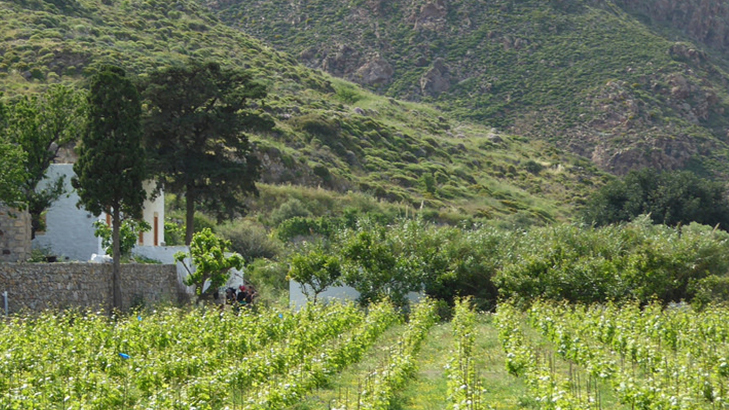
Patmos today lives mainly from the provision of services and tourism. However, until its relatively recent past and despite its small size, it was a thriving agricultural and productive society. Its dominant activity was viticulture, with a significant production of grapes, mainly destined for Egypt. Nowadays, most of the vineyards on the island are small and are for private consumption. The now bare terraces and the old wine presses remain as an irrefutable witness to the life of yesterday.
The bright exception is the Patoinos estate, an ambitious and romantic initiative. Through this initiative and in an area of about 20 hectares, a model biodynamic cultivation based on old varieties of vines that thrive in the island climate has been attempted in recent years. The estimate of the people of Patoinos is to reach an annual production of about 7,000 bottles.
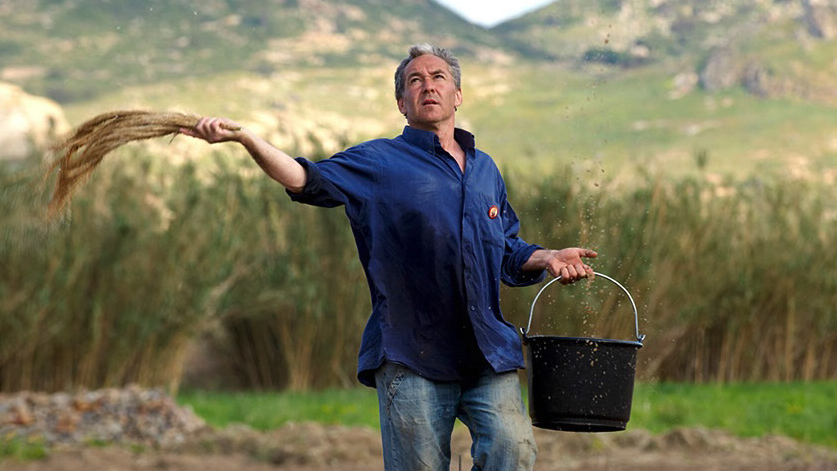
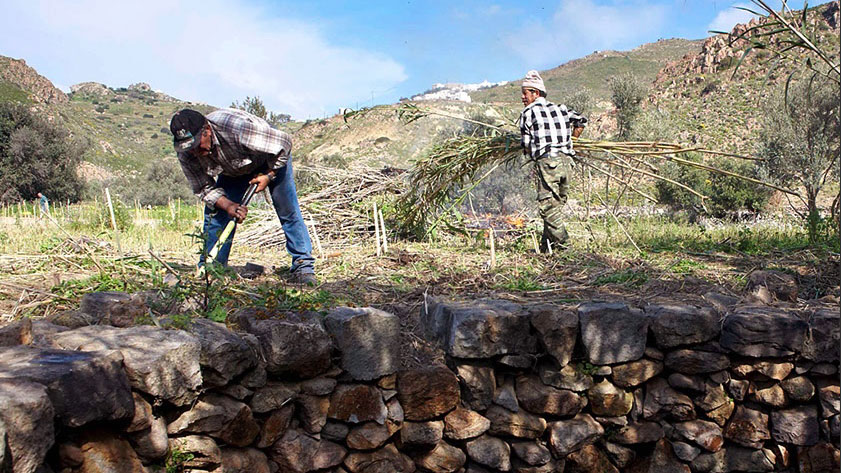
But viticulture is not the only agricultural production that the island has to offer. A large number of residents maintain small or medium sized estates for their family needs, following seasonal cultivation.
Two things are very interesting here: firstly, the taste of these products, as they are mostly grown as naturally as possible, and secondly, that most of the inhabitants are willing to show how hospitable they are. They will proudly offer you to sample the fruits of their labour and if their production is sufficient, they can even supply you with small quantities for your own needs.
Finally, Patmos has to offer you one more valuable natural resource. The beneficial properties of honey need no special introduction and as in this case too the production is small, but you can take its quality and purity for granted.
You can choose between the honey produced by the nuns of the Monastery of Evangelismos, which is available in the Monastery’s shop, but also in the local market, in the very limited number of local producers.
We use cookies on our website to give you the most relevant experience by remembering your preferences and repeat visits. By clicking “Accept”, you consent to the use of ALL the cookies.
This website uses cookies to improve your experience while you navigate through the website. Out of these, the cookies that are categorized as necessary are stored on your browser as they are essential for the working of basic functionalities of the website. We also use third-party cookies that help us analyze and understand how you use this website. These cookies will be stored in your browser only with your consent. You also have the option to opt-out of these cookies. But opting out of some of these cookies may affect your browsing experience.